
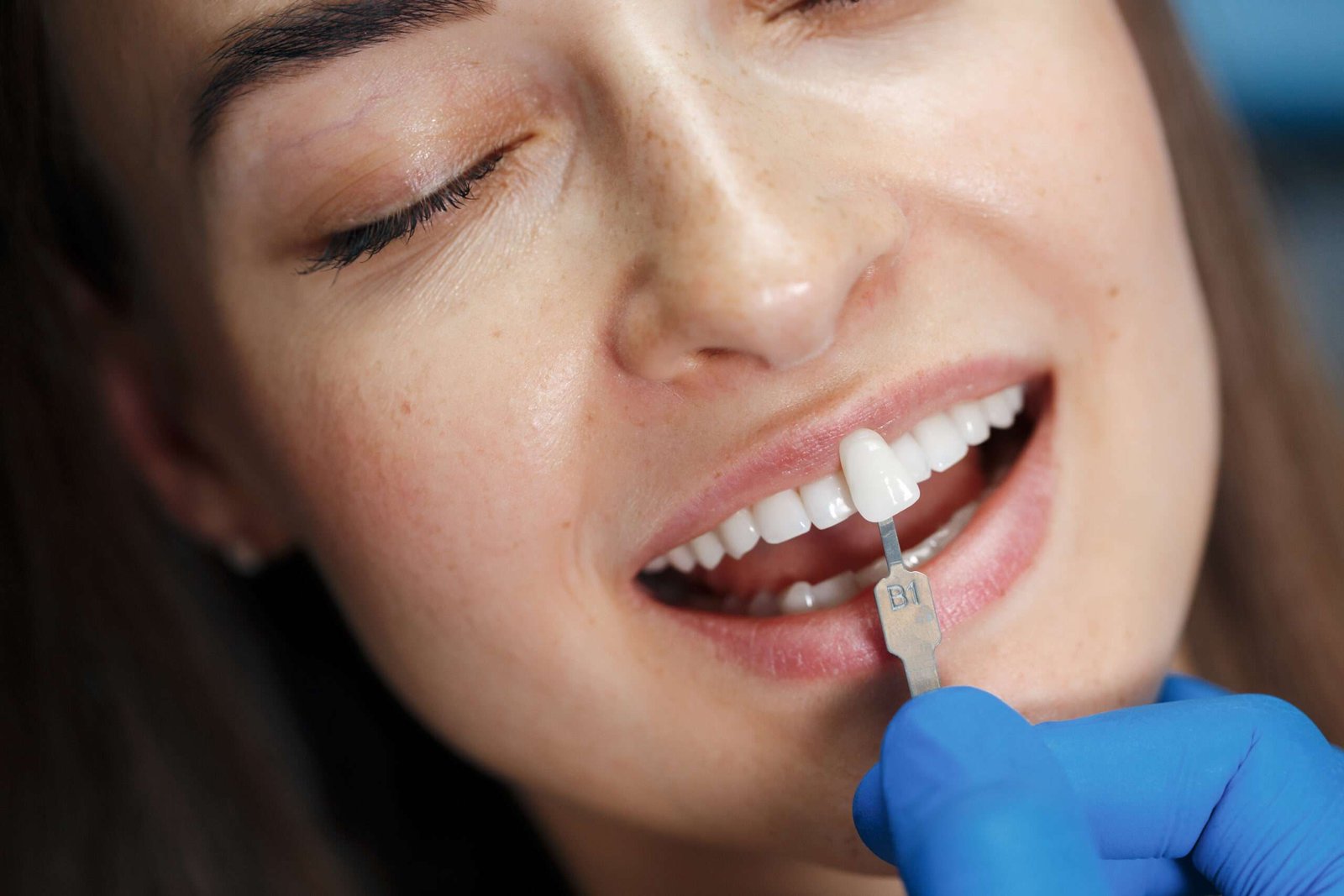
A dental bridge is a fixed replacement for one or more missing teeth. It literally bridges the gap, using the teeth on either side for support, so you can chew, speak and smile normally again without a removable plate.
This guide explains how a bridge works, the different types, what the treatment involves step by step, and how to look after a bridge so that it lasts for many years.
What is a dental bridge?
A dental bridge has two main parts. The replacement tooth that fills the gap is called a pontic. Abutments hold it in place. These are usually crowns (caps) fitted over the natural teeth next to the gap, or in some cases dental implants. The dental laboratory makes the whole unit in one piece and your dentist cements it in place, so unlike a denture, you do not take it out.
Why replacing a missing tooth matters
At first, a single gap can seem harmless, especially at the back of the mouth. However, it gradually affects the teeth around it.
- Neighbouring teeth can tilt or drift into the space, opening gaps elsewhere
- The opposing tooth can slowly over-erupt into the gap
- Your bite can change, putting extra load on the remaining teeth and sometimes the jaw joints
- Chewing on one side becomes a habit, and food traps more easily
- A visible gap can affect speech and confidence
Types of dental bridge
Traditional bridge
This is the most common type. Your dentist places crowns on the teeth on both sides of the gap, with the pontic between them. It is strong and suitable for front and back teeth. However, your dentist must reshape the supporting teeth to take the crowns.
Cantilever bridge
Here a crown on only one side supports the pontic. For this reason, dentists use it only in specific situations, usually where there is a healthy tooth on just one side of the gap and the biting forces are low.
Maryland (resin-bonded) bridge
A conservative option, mostly for front teeth. Instead of full crowns, your dentist bonds small metal or ceramic wings to the back of the neighbouring teeth, so you lose very little tooth structure. On the other hand, it is less suited to back teeth, where chewing forces are higher.
Implant-supported bridge
When several teeth in a row are missing, implants can serve as the abutments instead of natural teeth. As a result, it avoids reshaping healthy teeth, but it involves minor surgery and a healing period of a few months before the bridge is fitted. Read more about dental implants in Bangalore.
What is a dental bridge made of?
Today, dentists make most bridges from porcelain fused to metal, or from metal-free ceramics such as zirconia and lithium disilicate (e.max). Metal-free options look more natural, especially in the smile zone, while zirconia is very strong for back teeth. Your dentist will suggest a material based on the position of the gap, your bite and your budget. Our article on zirconia caps explains more about this material.
Who is a good candidate for a dental bridge?
A dental bridge works best when:
- The teeth next to the gap are strong, with healthy roots and enough support
- The gums are healthy. Your dentist should treat active gum disease first; see our guide to bleeding gums
- The gap is short, usually one or two missing teeth
- The neighbouring teeth already have large fillings or need crowns anyway, so preparing them brings an added benefit
- You are able to clean carefully under the bridge every day
On the other hand, if the neighbouring teeth are untouched and healthy, an implant may be preferable because it does not require reshaping them. Similarly, long gaps, weak supporting teeth or heavy grinding may call for a different plan.
Dental bridge or another option?
The right way to replace a missing tooth depends on your mouth, health and priorities. This table summarises how a bridge compares with the two main alternatives.
| Dental bridge | Dental implant | Removable partial denture | |
|---|---|---|---|
| What supports it | Neighbouring teeth (or implants) | A titanium post in the jawbone | Gums and clasps on remaining teeth |
| Effect on neighbouring teeth | Usually reshaped for crowns | Left untouched | Clasps can put some strain on them |
| Surgery needed | No (for a tooth-supported bridge) | Yes, minor surgery | No |
| Typical treatment time | A few weeks | Several months, including healing | A few weeks |
| Fixed or removable | Fixed | Fixed | Removable |
Learn more about how implants support oral health and BPS dentures.
The dental bridge procedure, step by step
A traditional dental bridge usually takes two or more visits spread over a couple of weeks. According to the Cleveland Clinic, local anaesthesia keeps you comfortable during the preparation stage.
1. Examination and planning
Your dentist examines the gap and the supporting teeth and takes X-rays to check the roots and bone. Your dentist treats any decay or gum problems first. If a supporting tooth has a damaged nerve, it may need root canal treatment before the bridge is made.
2. Preparing the supporting teeth
After numbing the area, your dentist reshapes the supporting teeth so the crowns can fit over them. An impression or a digital scan records the exact shape of your teeth, and your dentist then matches the shade so that the bridge blends in with your natural teeth.

3. Wearing a temporary bridge
Meanwhile, while the dental laboratory makes your permanent bridge, a temporary bridge protects the prepared teeth and fills the gap. It is worth avoiding very sticky or hard foods on that side during this time.
4. Fitting the permanent bridge
At the final visit, your dentist removes the temporary, tries in the new bridge and checks its fit, colour and bite. Finally, once everything is right, your dentist cements the bridge firmly in place.
What to expect after getting a dental bridge
It is normal for the supporting teeth to feel slightly sensitive to cold for a few days, and for your bite to feel unfamiliar until you get used to it. If sensitivity lasts beyond a couple of weeks, or the bite feels high, let your dentist know so they can adjust it. Our article on sensitive teeth explains this kind of discomfort in more detail.
How to care for a dental bridge
Although a bridge itself cannot decay, the teeth supporting it can, especially where the crown meets the gum. Good daily care protects them.
- Brush twice a day with a soft brush and fluoride toothpaste, paying attention to the gumline around the crowns
- Clean under the pontic every day using a floss threader, bridge floss, an interdental brush or a water flosser
- Keep up regular check-ups and professional cleaning
- Avoid biting on very hard things such as ice, bones or bottle caps
- Wear a night guard if you grind your teeth
How long does a dental bridge last?
With good care, a dental bridge commonly lasts between five and fifteen years, and many last longer. In most cases, the reasons a bridge fails are decay in a supporting tooth, gum disease around it, and heavy grinding, all of which are largely preventable.
Signs your dental bridge needs attention
- The bridge feels loose or moves when you chew
- Food keeps getting trapped, or you notice a bad taste or smell around it
- Pain or sensitivity in one of the supporting teeth
- Swollen or bleeding gums around the bridge
- A chip, crack or dark line at the edge of a crown
Catching these problems early often means a simple repair rather than replacing the whole bridge.
Dental bridge treatment at Amaya Dental in Bengaluru
At Amaya Dental, we begin by assessing the gap, the supporting teeth, your gums and your bite, and then talk you through whether a dental bridge, an implant or another option suits you best. For patients missing several teeth, we also offer full mouth rehabilitation planning.
To discuss replacing a missing tooth, book a consultation or contact our team.
The bottom line
A dental bridge is a reliable, fixed way to replace one or two missing teeth, usually completed in a few weeks without surgery. It works best when the supporting teeth and gums are healthy, and it lasts longest when you clean under it daily and keep up regular check-ups. For an independent overview, see the Cleveland Clinic guide to dental bridges.
Frequently Asked Questions About Dental Bridges
No. Your dentist numbs the supporting teeth with local anaesthetic before preparing them. Afterwards, mild tenderness or cold sensitivity for a few days is common and usually settles on its own.
Yes. A bridge can replace two or sometimes more teeth in a row, depending on the strength of the supporting teeth. For longer gaps, an implant-supported bridge is often the better choice.
Yes. Once the permanent bridge is fitted, you can eat most foods normally. However, it is still wise to avoid biting very hard objects, which can chip any restoration.
A good dental laboratory shades and shapes the bridge to match your own teeth. Metal-free ceramic bridges look especially natural in the front of the mouth.
Your dentist cements a fixed bridge in place, so only a dentist can remove it. If a bridge or supporting tooth develops a problem, your dentist can usually remove the bridge and replace it with a new one.
Neither is better for everyone. For example, a bridge is quicker and avoids surgery, while an implant leaves neighbouring teeth untouched. Your dentist will recommend one based on your teeth, gums, bone and preferences.


