Have you noticed Blood on your toothbrush, in the sink, or between your teeth after flossing? Bleeding gums are not usually something to ignore. In many cases, they are an early sign of gingivitis, a form of gum inflammation commonly linked to plaque buildup.
The good news is that gingivitis can generally be reversed when the inflammation is addressed early. The concern is what can happen if gum inflammation is allowed to continue. In some people, it can progress to periodontitis, a more advanced form of gum disease that damages the tissues and bone supporting the teeth.
Early gum disease can be surprisingly subtle. Your gums may bleed without causing much pain, which makes it easy to put off a dental visit.
Understanding what gingivitis looks like, how it differs from periodontitis, and when bleeding gums need professional attention can help you take action before the problem becomes more complicated.
Why Are My Gums Bleeding?
The most common dental reason for bleeding gums is inflammation caused by plaque buildup around the teeth and gumline.
Plaque is a sticky layer of bacteria that constantly forms on your teeth. Brushing and cleaning between the teeth help remove it. If plaque remains around the gumline, it can irritate the surrounding tissue and trigger inflammation.
The gums may then become:
- Red or darker than usual
- Swollen or puffy
- Tender
- More sensitive during brushing
- Prone to bleeding when touched
Plaque can also harden into tartar, or calculus. Once hardened, it cannot be effectively removed with ordinary brushing and flossing and usually requires professional cleaning.
Bleeding may become noticeable when you:
- Brush your teeth
- Floss or use interdental brushes
- Eat hard or crunchy foods
- Touch an inflamed area of gum
- Clean around areas where plaque or tartar has accumulated
Bleeding gums do not necessarily mean that you are brushing too hard. If the bleeding keeps happening, the underlying cause should be checked.
What Does Gingivitis Look Like?
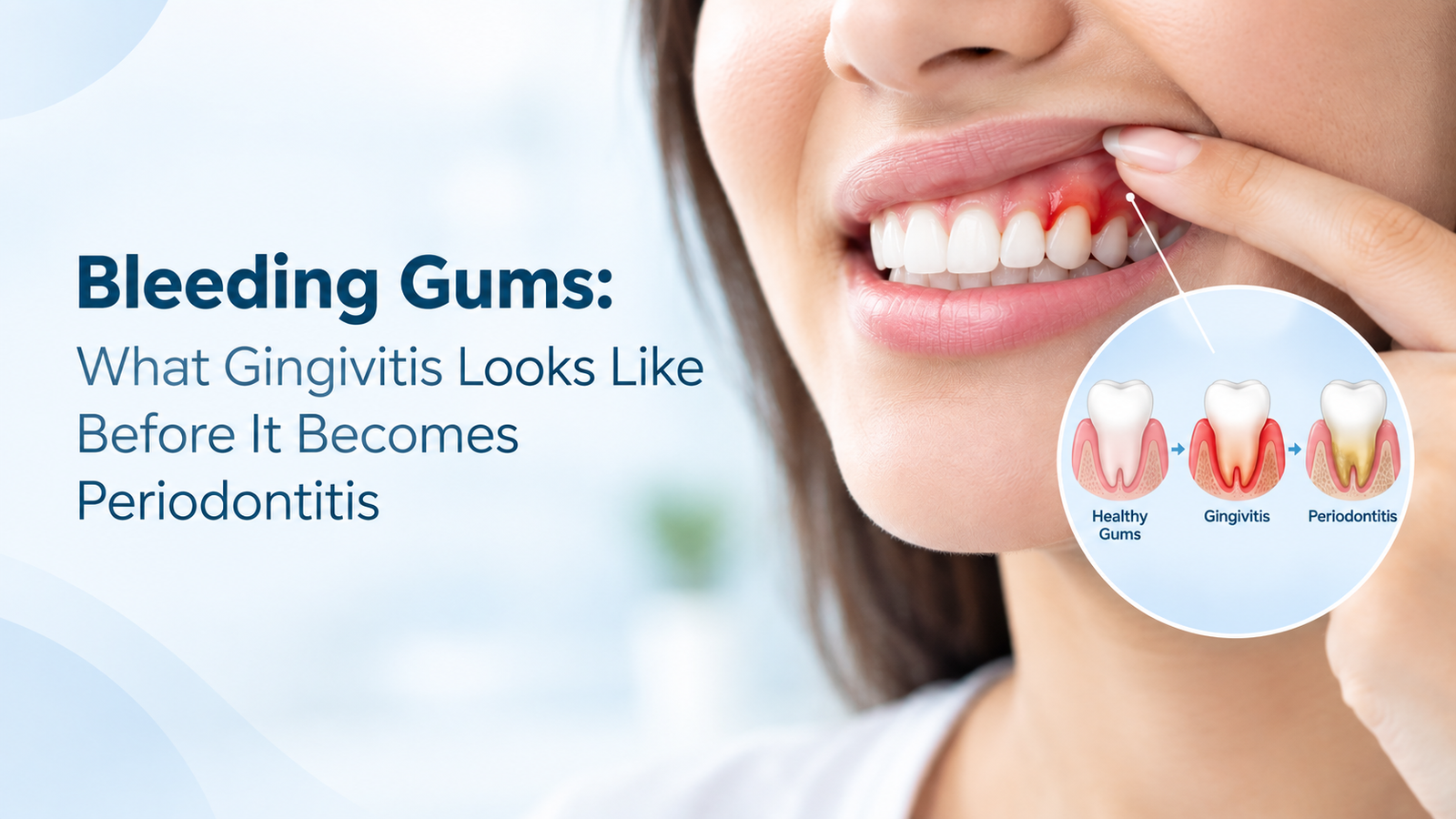
Gingivitis often causes red, swollen, or puffy gums that bleed easily during brushing or cleaning between the teeth.
Healthy gums are generally firm and fit closely around the teeth. When they become inflamed, their appearance and texture can change.
You may notice:
| Sign | What it may look like or feel like |
|---|---|
| Bleeding gums | Blood appears during brushing or flossing |
| Red or darker gums | Gum colour appears different from normal |
| Swelling | Gums look puffy or enlarged |
| Tenderness | Gums feel sensitive when touched |
| Bad breath | Breath remains unpleasant despite routine brushing |
| Bleeding between teeth | Blood appears when cleaning interdental spaces |
One of the most important differences between gingivitis and periodontitis is that gingivitis does not involve the destructive bone loss characteristic of periodontitis.
That means bleeding gums do not automatically mean that you have advanced gum disease.
However, recurring bleeding is still a reason to pay attention to your gum health.
Is Bleeding Gums a Sign of Gingivitis?
Yes, bleeding gums are a common sign of gingivitis, but bleeding alone cannot confirm that gingivitis is the cause.
Plaque-related gum inflammation is a frequent explanation, but several other factors can cause or contribute to gum bleeding.
These include:
- Brushing too aggressively
- Injury to the gums
- Hormonal changes
- Pregnancy
- Certain medications
- Tobacco use
- Nutritional deficiencies
- Diabetes
- Certain medical or blood-related conditions
This is why it is better not to diagnose yourself based on bleeding alone.
A dental professional can examine your gums, check for plaque and tartar, assess inflammation, and evaluate the tissues surrounding your teeth.
If there are signs of periodontitis, a more detailed periodontal examination and dental imaging may be recommended.
Gingivitis vs Periodontitis: What Is the Difference?
Gingivitis primarily affects the gums, while periodontitis involves damage to the supporting tissues and bone around the teeth.
Although the two conditions can share symptoms, they are not the same.
| Feature | Gingivitis | Periodontitis |
|---|---|---|
| Gum inflammation | Common | Common |
| Bleeding | Common | May occur |
| Red or swollen gums | Common | May occur |
| Supporting bone loss | No | Yes |
| Gum recession | Not a defining feature | May occur |
| Periodontal pockets | No destructive periodontal pocketing | May develop |
| Loose teeth | Not typical | May occur |
| Reversibility | Generally reversible | Existing tissue and bone loss cannot simply be reversed |
| Professional assessment | Important | Essential |
| Clinical distinction | Important | Important |
Someone with bleeding gums may have gingivitis that can be brought under control with professional cleaning and improved daily oral hygiene. Another person with similar bleeding may already have deeper periodontal problems.
You cannot reliably determine the difference just by looking in the mirror.
How Can Gingivitis Progress to Periodontitis?
Persistent inflammation associated with plaque can lead to destruction of the tissues supporting the teeth, resulting in periodontitis.
A simplified progression is:
Plaque buildup → gum inflammation → gingivitis → periodontal tissue breakdown → attachment and bone loss → periodontitis
When periodontitis develops, the gum can separate from the tooth and form spaces called periodontal pockets.
These deeper spaces can make cleaning below the gumline more difficult. Bacteria and plaque can accumulate in these areas, contributing to ongoing inflammation.
As supporting tissues are damaged, bone around the teeth can be lost. In more advanced cases, teeth can become loose, and tooth loss may occur.
Not everyone with gingivitis will develop periodontitis. Risk is influenced by several factors, including oral hygiene, tobacco use, diabetes, and individual susceptibility.
The important point is that persistent gum inflammation should be addressed before it has an opportunity to cause more extensive damage.
What Are the Early Warning Signs Before Periodontitis?
Bleeding, redness, swelling, and bad breath can be early warning signs of gum disease. Gum recession, loose teeth, and changes in how teeth fit together may indicate more advanced periodontal problems.
Watch for changes that persist rather than focusing on a single episode of bleeding.
Your Gums Bleed Regularly
If your gums bleed repeatedly during routine brushing or interdental cleaning, it is worth finding out why.
Healthy gums should not routinely bleed during normal oral hygiene.
Your Gums Are Swollen or Red
Inflammation can make the gums look puffy, red, or darker than usual.
Your Gums Appear to Be Receding
Gum recession exposes more of the tooth and can make teeth appear longer.
Recession does not automatically mean periodontitis. It can have other causes, including brushing trauma and other gum conditions. However, noticeable or progressive recession should be evaluated.
Your Teeth Feel Loose
Tooth mobility can occur when the tissues supporting the tooth have been significantly affected.
A newly loose tooth should be assessed by a dentist rather than monitored indefinitely at home.
You Have Persistent Bad Breath
Bad breath can occur alongside gum disease, although it can have many other causes.
If persistent bad breath occurs together with bleeding or swollen gums, it is worth discussing with your dentist.
Your Teeth Seem to Be Shifting
Changes in tooth position or the way your teeth come together can sometimes occur when supporting tissues have been affected.
One reason periodontal disease can be overlooked is that it does not always cause significant pain.
Waiting for toothache before checking your gums is therefore not a reliable way to detect gum disease.
What Causes Bleeding Gums Besides Gingivitis?
Bleeding gums can have causes other than plaque-related gingivitis.
For example, hormonal changes can make gum tissue more sensitive. Pregnancy is one situation where this can occur.
Certain medications can also affect bleeding. If you take medicines that influence blood clotting, tell your dentist before treatment.
Other possible contributors include:
- Tobacco use
- Diabetes
- Nutritional deficiencies
- Gum injury
- Certain Blood or clotting disorders
- Changes in hormone levels
- Some medications
This does not mean that a serious medical condition is the likely explanation for ordinary gum bleeding. It simply means that persistent or unexplained bleeding should be assessed instead of repeatedly treating the symptom without identifying its cause.
What Deficiency Causes Bleeding Gums?
Severe vitamin C deficiency can contribute to bleeding gums, but plaque-related gum inflammation is a much more common dental explanation.
If you have persistent bleeding despite maintaining good oral hygiene, do not automatically assume that you need a vitamin supplement.
A dentist or doctor can help determine whether the bleeding is related to your gums or whether another evaluation is appropriate.
Taking supplements without confirming a deficiency may not solve the underlying problem.
Can Pregnancy Cause Bleeding Gums?
Yes. Hormonal changes during pregnancy can make the gums more sensitive to plaque and more likely to become inflamed and bleed.
This is commonly referred to as pregnancy gingivitis.
Maintaining good oral hygiene during pregnancy is important. Continue brushing twice a day and cleaning between your teeth, using a technique that is comfortable and appropriate for your mouth.
If your gums become very swollen, painful, or persistently bloody, discuss the symptoms with your dentist instead of assuming they are simply a normal part of pregnancy.
How Do You Stop Bleeding Gums?
When plaque-related inflammation is responsible, consistent plaque removal and appropriate professional dental care can help control bleeding gums.
There is no single home remedy that can treat every cause of gum bleeding.
Instead, focus on habits that address the underlying problem.
Brush Twice a Day
Use a soft-bristled toothbrush and fluoride toothpaste.
Brush gently along the gumline rather than aggressively scrubbing the gums.
Clean Between Your Teeth
A toothbrush cannot reach every surface between your teeth.
Floss, interdental brushes, or another interdental cleaning method may be appropriate depending on the size of your spaces and your individual dental needs.
Do Not Stop Cleaning Because Your Gums Bleed
It is understandable to avoid an area that bleeds.
However, if plaque is contributing to the inflammation, avoiding the area can allow more plaque to remain.
Continue cleaning gently and consistently.
Remove Tartar Professionally
Hardened tartar cannot be effectively removed using a toothbrush at home.
Professional dental cleaning may therefore be necessary when calculus has accumulated.
For a more detailed overview of professional approaches, you can explore Amaya Dental’s guide to gum disease treatment and prevention.
Avoid Tobacco
Smoking and tobacco use are important risk factors for periodontal disease.
If you use tobacco, discuss cessation options with an appropriate healthcare professional.
Maintain Regular Dental Checkups
The appropriate frequency of dental visits varies from person to person.
People with a history of gum disease may require closer monitoring than someone with healthy gums and a low risk of periodontal problems.
Is Mouthwash Enough to Stop Bleeding Gums?
No. Mouthwash should not replace brushing and cleaning between your teeth.
Some therapeutic mouthrinses can be useful as an addition to regular oral hygiene, depending on the ingredients and your individual needs.
However, using mouthwash alone does not remove plaque from every tooth surface or replace professional removal of hardened calculus.
If your gums continue to bleed, it is more useful to find out why than to keep changing mouthwash products.
Your dentist can advise whether a particular mouthwash is appropriate for you.
What Treatment Is Used for Bleeding Gums and Gum Disease?
Treatment depends on whether the bleeding is caused by gingivitis, periodontitis, or another condition.
For gingivitis, treatment commonly focuses on controlling plaque and removing deposits such as tartar.
This may involve professional cleaning and improvements to brushing and interdental cleaning.
If periodontitis is diagnosed, treatment may need to address areas below the gumline. Depending on the severity and individual circumstances, periodontal care can include scaling and root planing, ongoing periodontal maintenance and, in selected cases, additional periodontal procedures.
The appropriate treatment depends on factors such as periodontal pocket depth, attachment loss, inflammation, and the condition of the supporting bone.
Amaya Dental’s gum disease treatment and prevention guide provides additional information about professional approaches to managing gum disease.
What About Laser Gum Treatment?
Laser technology may be used in selected dental and periodontal procedures, but it is not automatically necessary for everyone with bleeding gums.
Whether laser treatment is appropriate depends on the diagnosis, the condition being treated, and the dentist’s treatment plan.
Amaya Dental has information about laser gum treatment as well as its broader laser dentistry treatment in Bangalore.
These pages can help patients understand the technology, but treatment decisions should always follow an individual clinical assessment.
When Should You See a Dentist for Bleeding Gums?
You should arrange a dental examination if your gums repeatedly bleed during brushing or flossing, especially if bleeding is accompanied by swelling, redness, bad breath, recession, or other changes.
Do not wait until the gums become painful.
A dental appointment is particularly important if you notice:
- Persistent gum bleeding
- Significant gum swelling
- Pus around the gums
- Loose teeth
- Increasing tooth mobility
- Noticeable gum recession
- Changes in your bite
- Persistent unpleasant taste or bad breath
- Pain while chewing
- Bleeding that seems excessive or unexplained
Very heavy bleeding, facial swelling, difficulty swallowing, or other signs of a serious infection require prompt professional attention.
If you experience unusual bleeding elsewhere in the body as well, speak with a medical professional.
How Does a Dentist Check Whether It Is Gingivitis or Periodontitis?
A dentist looks at more than whether the gums bleed. A periodontal assessment can evaluate the gums, periodontal pockets, attachment around the teeth and, when necessary, supporting bone.
During an examination, your dentist may assess:
- Gum colour and swelling
- Plaque accumulation
- Tartar or calculus
- Bleeding
- Periodontal pocket depth
- Gum recession
- Attachment around the teeth
- Tooth mobility
- Changes in tooth position
A periodontal probe may be used to measure the tissues around individual teeth.
If bone loss is suspected, dental X-rays or other appropriate imaging can provide additional information.
This is why symptoms alone cannot tell you whether you have gingivitis or periodontitis.
Two people may both report bleeding gums but require very different approaches.
One may have uncomplicated gingivitis. Another may have periodontal pockets and supporting bone loss.
Bleeding is a warning sign, not a measurement of disease severity.
Can Gingivitis Be Reversed Before It Becomes Periodontitis?
Yes. Gingivitis is generally reversible when the inflammation is controlled, and destructive periodontal tissue loss has not occurred.
This is one of the strongest reasons to address bleeding gums early.
Professional cleaning can remove plaque and calculus that cannot be effectively removed at home. Good daily brushing and interdental cleaning then help prevent plaque from building up again.
Periodontitis is different.
Once supporting bone and periodontal attachment have been lost, simply improving your brushing routine cannot restore those tissues to their original condition.
However, appropriate periodontal treatment can help control the disease and reduce the risk of further progression.
The earlier gum problems are identified, the easier it is to understand what is happening and what treatment, if any, is appropriate.
A Simple Daily Routine for Healthier Gums
Healthy gums depend more on consistency than on constantly changing dental products.
| Time | What to Do |
|---|---|
| Morning | • Brush your teeth with fluoride toothpaste. • Use a soft-bristled toothbrush. • Clean gently along the gumline. • Brush all accessible tooth surfaces. |
| During the Day | • Pay attention to areas where food and plaque tend to collect. • Use the interdental cleaning method recommended for your teeth. |
| Night | • Clean between your teeth • Brush before going to bed. • Avoid leaving plaque on your teeth overnight. |
| Regularly | • Attend dental examinations. • Have professional cleaning when recommended. • Tell your dentist about relevant medications and medical conditions. • Discuss persistent bleeding rather than assuming it is normal. |
Good daily oral hygiene is an important part of preventing and managing gum disease, but persistent bleeding still deserves professional assessment.
The Bottom Line: Do Not Ignore Bleeding Gums
Bleeding gums are often one of the first visible signs of gum inflammation.
In many cases, the cause is plaque-related gingivitis. At this stage, the condition is generally reversible when the underlying inflammation is addressed.
The concern is allowing the problem to continue unchecked.
Periodontitis affects the structures supporting the teeth and can result in periodontal attachment and bone loss. It may also progress without dramatic pain, making regular dental assessment particularly important.
If your gums bleed every time you brush or floss, do not panic. But do not dismiss the symptom either.
Continue cleaning your teeth gently, maintain daily interdental hygiene, and arrange a dental examination if the bleeding persists.
A professional assessment can determine whether the bleeding is related to gingivitis, periodontitis, or another cause and help you understand the next appropriate step.
If you are in Bengaluru and would like to discuss persistent bleeding gums with a dental professional, you can contact Amaya Dental to enquire about an appropriate consultation.
Healthy gums should not routinely bleed during everyday oral care. Finding the cause early can help protect the gums and the teeth they support.